- Organic fertilizer production equipment
- Farm basic equipment
- Ranch feeding machine

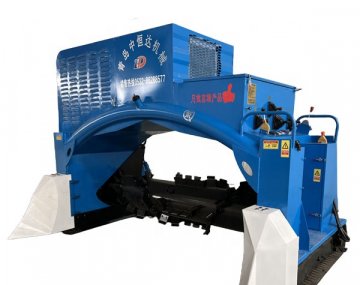
In the field of organic waste treatment, the performance of a compost turner directly determines the treatment efficiency, operating costs, and fermentation quality. With its advanced technical design and high-quality configuration, the HINDA compost turner has significant advantages over old-style compost turners (such as traditional windrow turners and simple turning machines) in core dimensions such as efficiency, energy consumption, and adaptability. The following is a comprehensive comparison from key dimensions to clearly present the differences between the two, providing a reference for equipment selection.
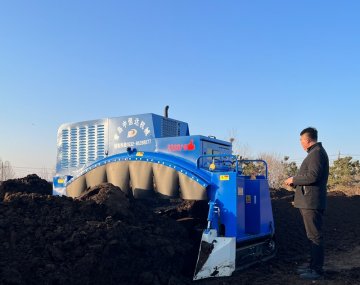
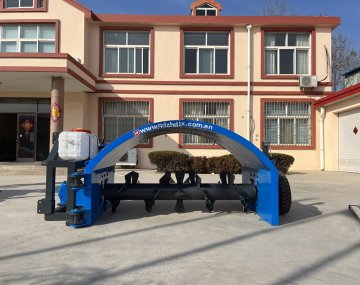
It adopts a full hydraulic control system with a compact overall structure and reasonable layout, featuring flexible and convenient operation. It does not require excessive space and is suitable for various operating scenarios. The engine power is scientifically and accurately matched, equipped with high-quality engines such as Yuchai and Cummins. The hydraulic system selects well-known brands such as Taiwan YOULI and Germany's Rexroth, and the hydraulic circuit has a self-cleaning function, which can effectively filter oil and prevent pipeline blockages. It not only ensures efficient operation but also significantly reduces energy consumption. Long-term use can greatly save operating costs, meeting the current environmental protection needs of energy conservation and consumption reduction.
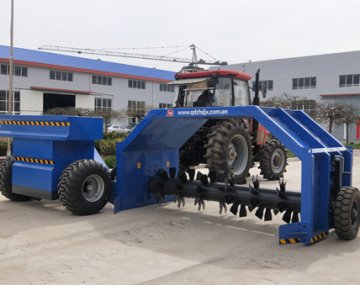
Most adopt traditional mechanical drive methods, with a loose structure, large floor space, and cumbersome operation due to unreasonable layout. The engine power matching is extensive without scientific optimization design. The hydraulic system mostly uses ordinary accessories without a self-cleaning function, which is prone to pipeline blockages and high energy consumption. At the same time, old-style compost turners mostly rely on traditional heating or natural fermentation assistance, resulting in large heat loss and further increasing energy consumption. The long-term operating costs are relatively high, which does not meet the needs of modern environmental protection production.
Key components are made of high-durability materials and advanced sealing technology, supporting maintenance-free operation during daily work. There is no need to frequently invest manpower and time in equipment maintenance, effectively saving maintenance costs. The overall failure rate of the equipment is low, and it is equipped with engineering-grade herringbone anti-slip rubber tracks (with embedded thickened manganese steel liners), which greatly improves the durability of the equipment, extends the service life, reduces project downtime, and ensures operational continuity.
The core components are made of ordinary materials with poor sealing performance, which are prone to wear, leakage and other problems during operation, requiring frequent maintenance. It not only consumes a lot of manpower and time costs but also leads to operational interruptions. The overall structural stability of the equipment is poor, the tracks or walking components are easily damaged, the failure rate is high, and the service life is short. Long-term use requires frequent replacement of parts, which further increases equipment investment costs and is difficult to meet the needs of large-scale and continuous operations.
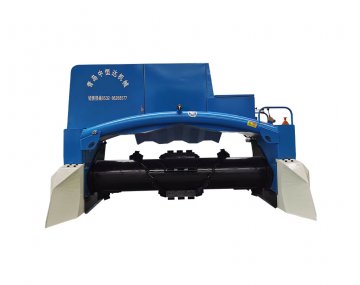
Equipped with infinitely adjustable operating speed, it can be flexibly adjusted according to material characteristics, and can efficiently process a variety of complex materials, including highly viscous sludge, kitchen waste and other raw materials that are difficult for old-style compost turners to handle, adapting to complex on-site working conditions. The diameter of the turning roller is 720mm, which expands the material throwing trajectory, increasing the single-pass turning volume by more than 40%, with a processing capacity of 800-1000 m³/h. It adopts a bidirectional double helical ribbon design, which can realize 360° all-round fermentation turning, ensuring full contact between materials and oxygen, achieving efficient aerobic fermentation, improving the quality of organic fertilizer, shortening the fermentation cycle, and solving the problems of uneven fermentation and low efficiency of traditional composting.
The operating speed is fixed and cannot be adjusted according to material characteristics, resulting in extremely poor adaptability. It can only handle easy-to-process materials such as straw and ordinary livestock manure. For difficult-to-process raw materials such as highly viscous sludge and kitchen waste, it is prone to problems such as incomplete turning and equipment jamming. The diameter of the turning roller is small, the throwing trajectory is limited, the single-pass turning volume is small, and the processing efficiency is low. Most of them adopt a single turning structure, which cannot realize all-round turning. The insufficient contact between materials and oxygen is prone to anaerobic fermentation, producing a lot of odor. The fermentation cycle is long and the quality of organic fertilizer is uneven. Some old-style equipment also have problems such as poor ventilation performance and uneven temperature control, which further affect the fermentation effect.
It supports both manual and remote control operation modes, with stepless speed regulation function. Operators can flexibly adjust the operating speed according to the material conditions, and can stay away from harsh operating environments such as odor and high temperature, improving operation comfort and safety. The equipment has national patents and is equipped with an LCD display, which can display the real-time equipment operation status and accurate fault location, facilitating quick troubleshooting, reducing operation difficulty, and even novices can quickly get started, realizing intelligent and convenient operation.
It only supports manual operation without remote control function. Operators need to be in close contact with materials, and long-term exposure to odor and high temperature environments results in poor operation comfort and low safety. There is no intelligent display and fault diagnosis function. When the equipment fails, it needs to be checked manually one by one, which is time-consuming and labor-intensive. The operation process is complex, requiring high technical requirements for operators, and the degree of automation and intelligence is extremely low, which is difficult to adapt to modern operation needs. It also has the problems of low manual turning efficiency and high labor intensity.
It adopts engineering-grade herringbone anti-slip rubber tracks with embedded thickened manganese steel liners, which are impact-resistant and wear-resistant, and can easily cope with complex terrains such as muddy, rocky and sloped areas. The unique herringbone pattern design can not only ensure grip on hard roads but also avoid scratching asphalt and cement ground, realizing zero site damage operation. At the same time, efficient aerobic fermentation reduces odor generation, meets environmental protection requirements, and can be promoted and used in various sites such as residential areas and industrial parks.
Most of the walking components are ordinary tires or simple tracks, with poor anti-slip and wear-resistant performance, which are difficult to adapt to complex terrains and prone to slipping, jamming and other problems. It is easy to scratch the site ground during operation, causing site damage. Moreover, most of them are open-air operations, which produce a lot of odor and stench during fermentation, polluting the surrounding environment, and it is difficult to pass strict environmental protection acceptance. It is not suitable for sites with high environmental protection requirements, and its promotion and use are greatly restricted.
The HINDA compost turner is comprehensively superior to the old-style compost turner in core design, energy consumption control, maintenance costs, material adaptability, operation experience and environmental protection. It not only solves the pain points of old-style compost turners such as low efficiency, high energy consumption, cumbersome maintenance and poor adaptability but also can meet the needs of large-scale, intelligent and environment-friendly operations, with higher cost performance in long-term use. The old-style compost turner is only suitable for simple composting scenarios with small scale, low requirements and loose environmental protection, and it is difficult to adapt to the current mainstream needs of organic waste resource treatment.